
Tomato Harvesting Robot
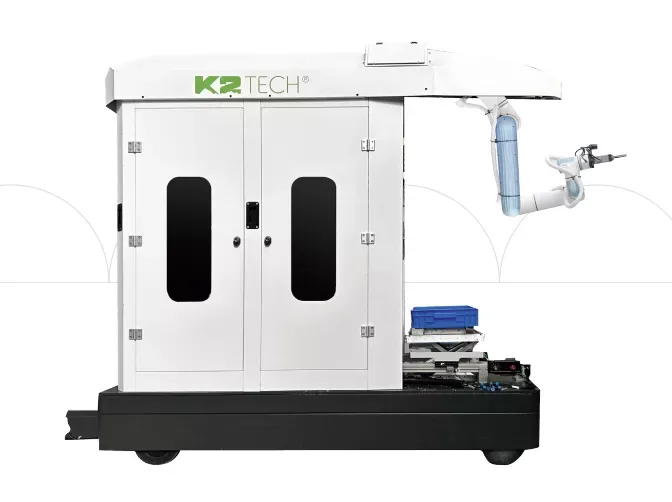
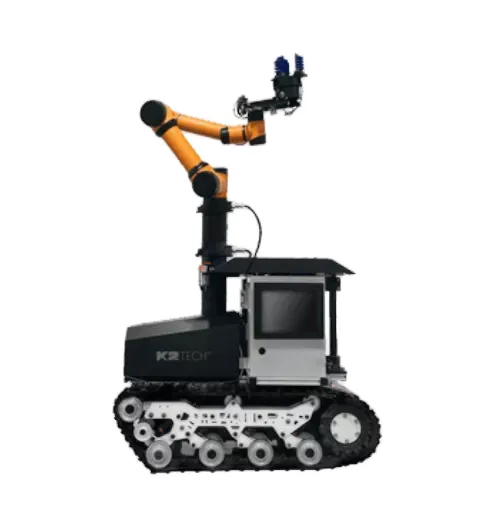
Tomato Harvesting Robot support single /cluster tomato picking.
About the Tomato Harvesting Robot
Tomato Harvesting Robot support single /cluster tomato picking. It automatically recognizes tomatoes and flexibly cut the tomato stalks from various directions. Automated tomato picking robot run automatically on green-house rails and pick tomatoes on both sides.
The task list, operating environment and figures on this page follow the published K2 TECH product page. Navigation, autonomy, payload and endurance values apply to the configuration described by the manufacturer; suitability for a specific farm, crop or greenhouse layout is confirmed in a site assessment.
No CE marking, EU conformity declaration or market-specific safety approval is published for this product. EMUS reviews the required documentation with K2 TECH before any project in the Balkan region.
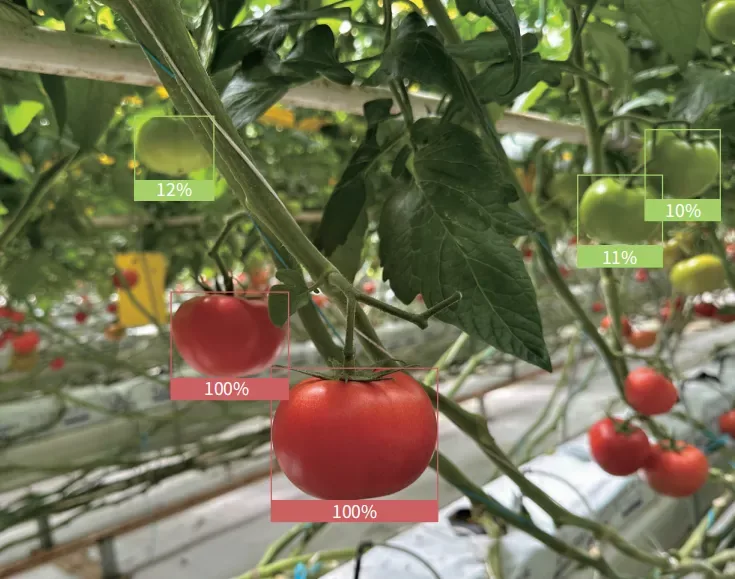
- AI Vision RecognitionUse 3D-Al technology to detect tomato ripeness, position,and surroundings ; With night vision for 24/7 operation ; Control tomato ripeness according to needs for consistent harvesting
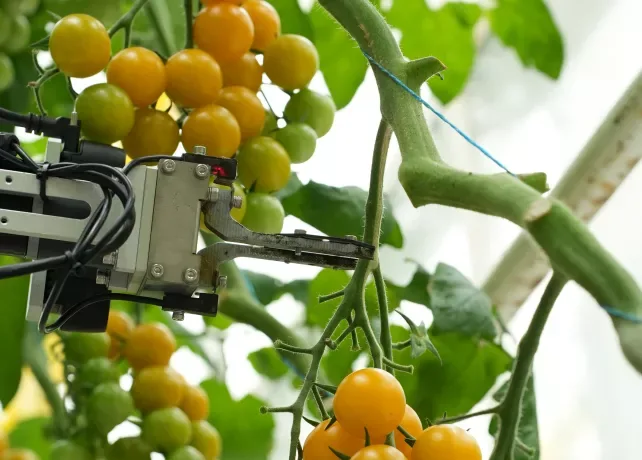
- Smart CuttingIndependently decide the best cutting position and angle to achieve accurate cutting ; Only the stems are targeted without touching the tomatoes
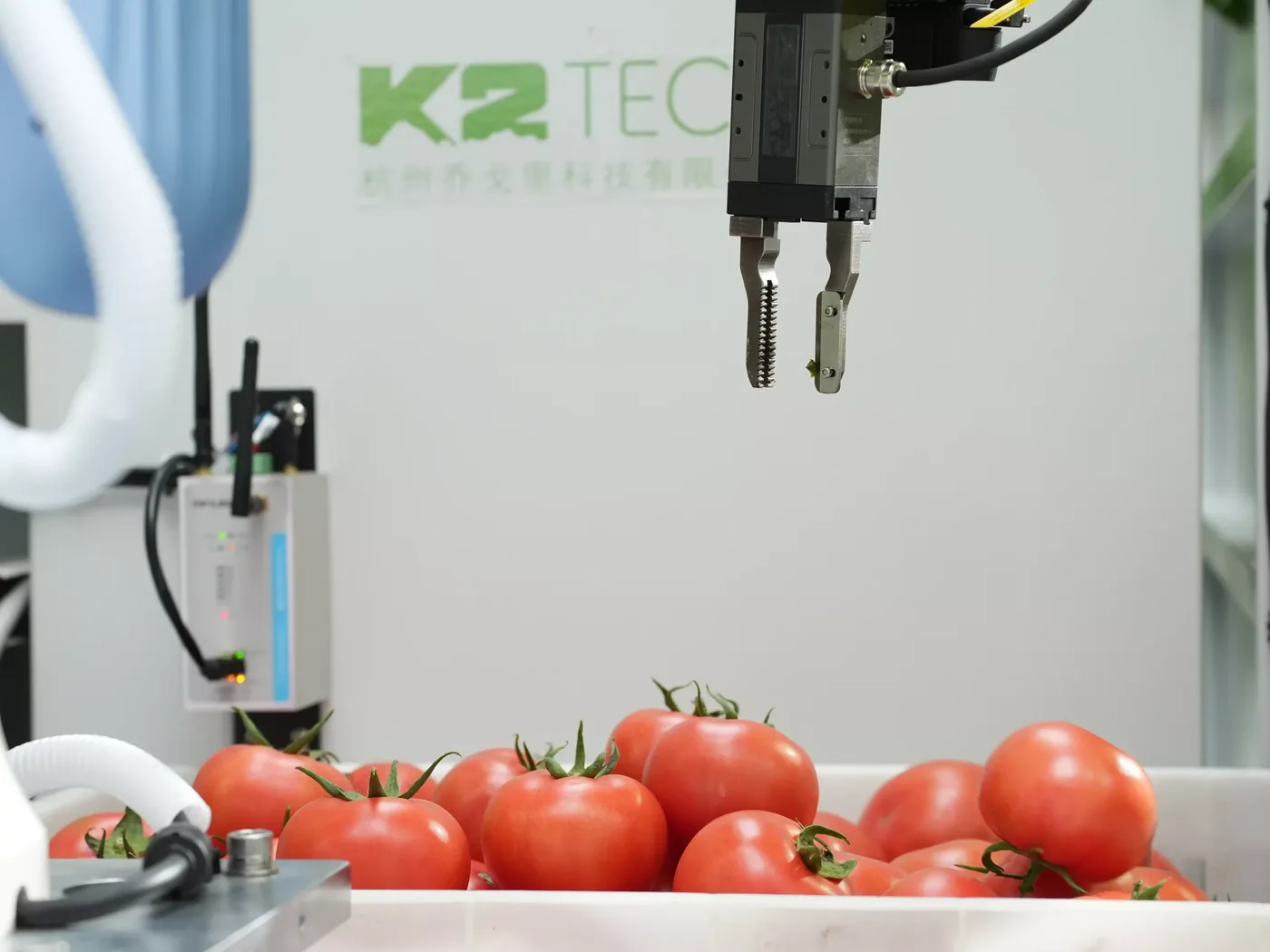
- Storage SystemStored in the robot’s own collection box ; Automatically piles and replaces the empty box after it is filled ; Store more tomatoes in one run and reduce manual loading and un-loading time
Technical data
- Fruit Varieties
- Vine /Individual Tomato
- Capacity
- 110 Kg / Hour
- Detection Accuracy
- ≥ 98%
- Execution Success Rate
- ≥ 95%
- Wastage
- ≤ 1 %
- Continuous Operation
- ≥16 H
- Size
- 2800(L)*720(W)*1800(H) mm
- Weight
- 760 Kg
- Loading Capacity
- 150 Kg
- Charging Input
- 24V 15A
Data from official K2 TECH product information. Final configuration is confirmed in the EMUS quotation.
Where the Tomato Harvesting Robot is used
- Vine Tomato
- Single Tomato
- Kiwi
- Grape
- Strawberry
Frequently asked questions
What tomato formats can the robot handle?
The published product specification covers vine and individual tomatoes. Final compatibility should be confirmed with representative fruit, stem presentation and the intended growing method.
How does the robot decide which tomatoes to pick?
The vision system evaluates visible ripeness, position and surrounding crop structure. The harvest standard can be configured around the project requirement, subject to validation with real crop samples.
Will it fit every greenhouse?
No single configuration fits every site. Row width, rail design, turning space, crop training, lighting, humidity and collection flow should be assessed before deployment.
What performance should we use for initial planning?
Qogori publishes 110 kg/hour nominal capacity, at least 98% detection accuracy, at least 95% execution success and at least 16 hours of continuous operation. Treat these as specification references; project results vary with operating conditions.
What information is needed for a proposal?
Share the tomato variety, greenhouse layout, row and rail dimensions, target ripeness, harvest schedule, labor model, collection method and any integration requirements.
Product imagery
Official product videos
Brochures, datasheets & catalogues
Intelligent tomato harvesting robot — brochure (2024-04)
PDF · Brochure
How EMUS supports this
Equipment is only part of the answer. Every system we supply is backed by regional engineering, service and application support.
Mechanical, electrical, environmental setup done right the first time.
Qualification and acceptance testing against real criteria.
Operator and application training built around your parts.
Traceable calibration to keep measurements audit-ready.
Preventive and corrective service across the Balkan region.
Method development and problem-solving with our engineers.
K2 TECH
TheTomato Harvesting Robot is part of the K2 TECH portfolio, supplied and supported by EMUS across the Balkan region.
Request Technical Consultation
Talk to an EMUS engineer about theTomato Harvesting Robot, your parts and tolerances, and the configuration that fits your inspection workflow.