Lyft
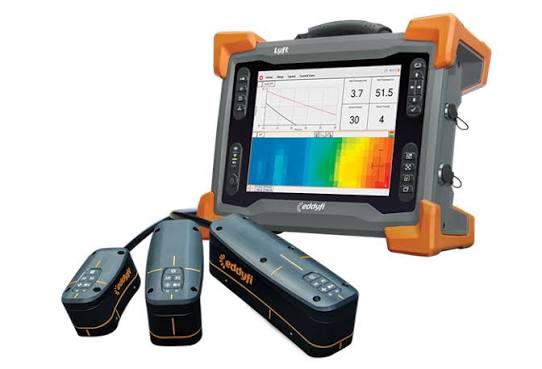
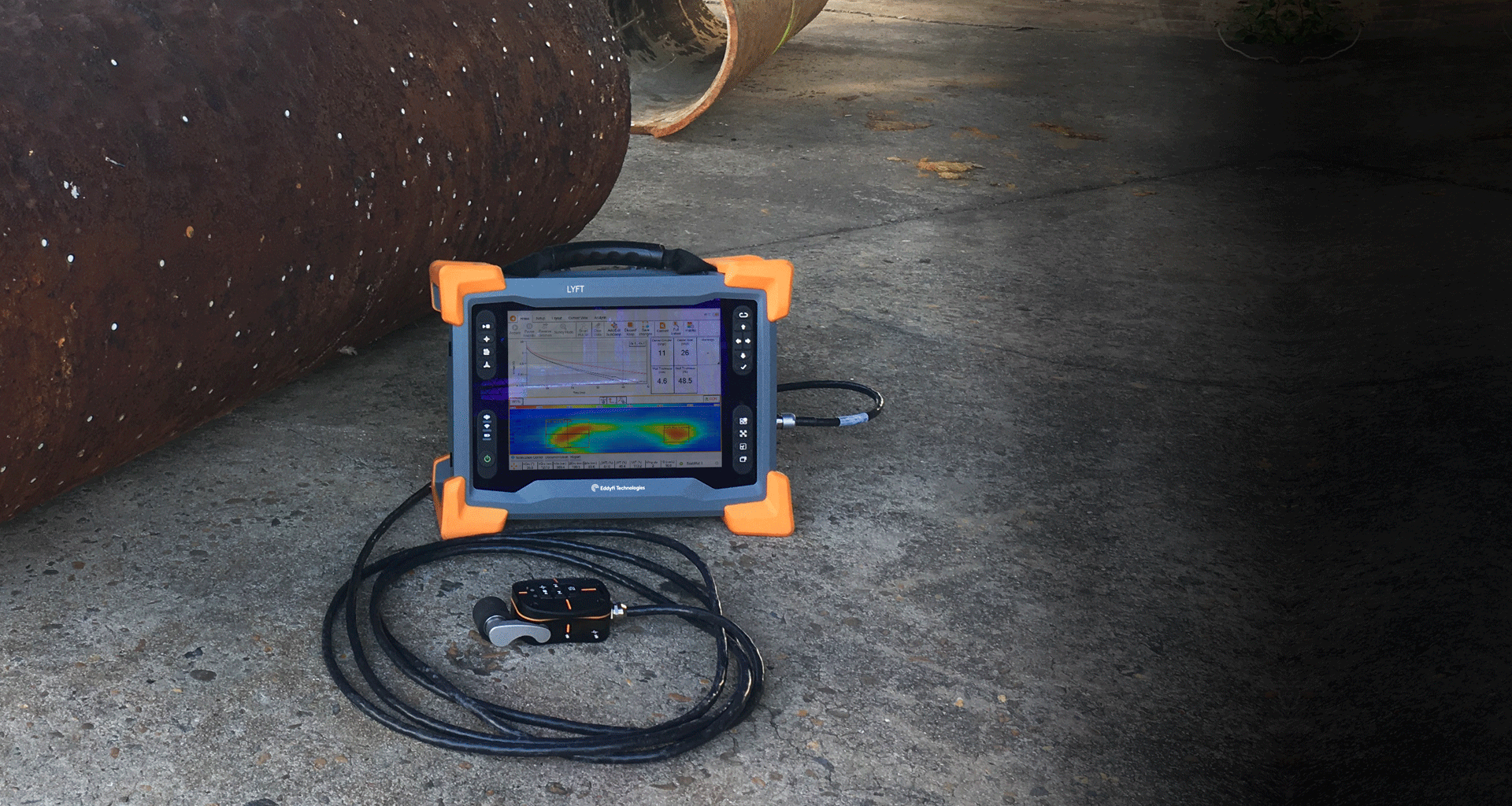
Lyft is a portable PEC and PECA inspection system for assessing corrosion through insulation, fireproofing, and weather jackets with real-time wall-thickness mapping.
Product overview
Lyft uses pulsed eddy current inspection to assess wall thickness without removing insulation or fireproofing. Its probe range supports inspection through aluminum, stainless steel, and galvanized steel weather jackets, with capabilities determined by the selected probe. Applications include insulated pipes and vessels, scab corrosion, storage tank annular plates, and marine structures.
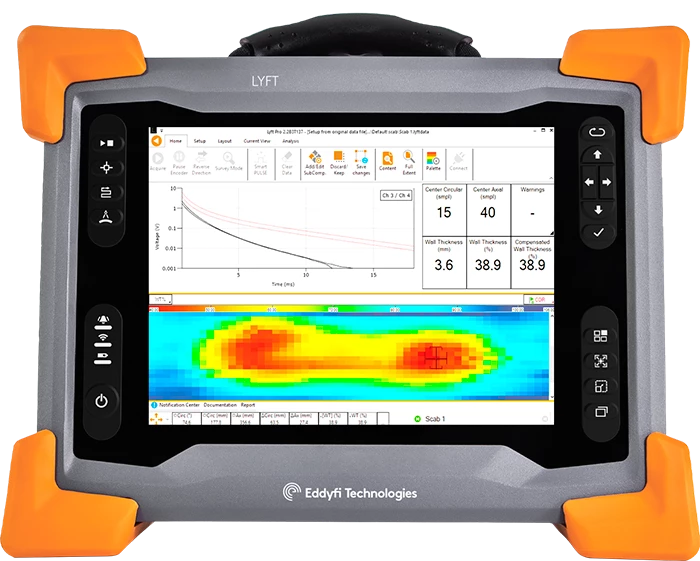
SmartPULSE automatically adjusts pulser and receiver settings and wall-thickness measurements to improve repeatability and reduce dependence on operator-specific setup. The software displays real-time C-scans in grid-mapping and dynamic modes and supports assessment of both internal and external corrosion. For defects smaller than the probe averaging area, the compensated wall thickness tool isolates the defect contribution to the A-scan to improve estimation of minimum remaining thickness.
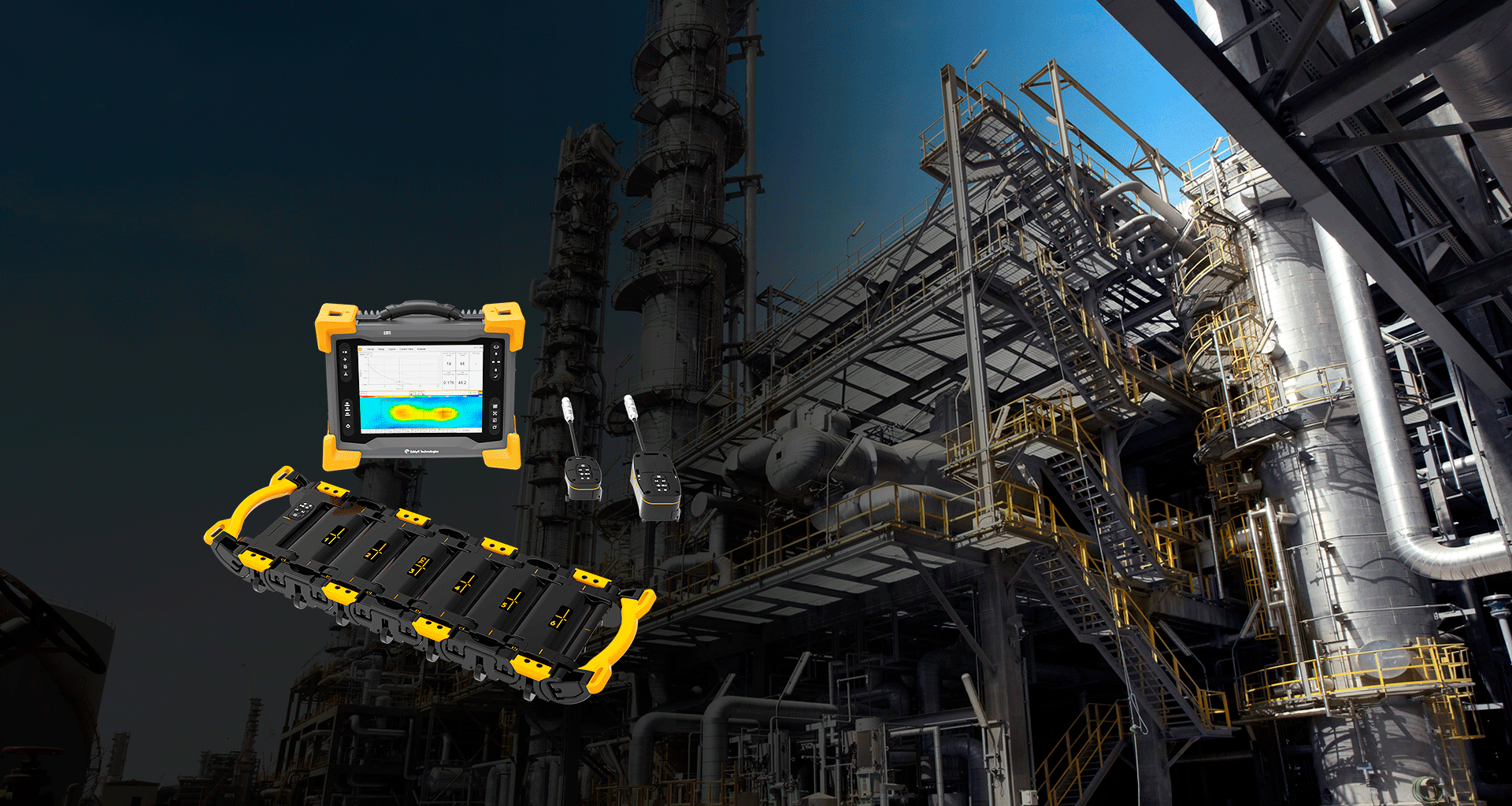
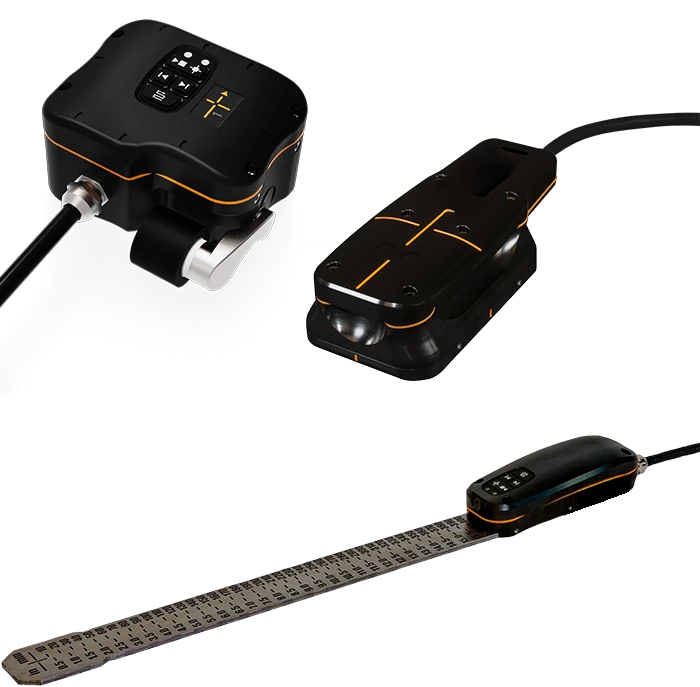
Single-element PEC probes complement PECA arrays for restricted access, small pipes, and thick components. The high-productivity PECA probe covers 457 mm (18 in) in a single pass and can improve overall inspection productivity as much as 10 times. Dedicated probes extend the system to scabs and corrosion blisters, tank floor edges, galvanized cladding, ship decks, splash zones, and underwater inspections, each within its stated operating limits.
The sealed magnesium-alloy instrument is designed for IP65 and combines a glove-operable touchscreen with two hot-swappable batteries. Lyft GO handles acquisition on the instrument, while Lyft CPN provides additional analysis tools on a laptop. SurfacePro 3D supports stitched C-scan visualization and reporting, and integrations with OneDrive, Zoom, and the Eddyfi mobile application support data management and collaboration.
Key capabilities
Inspection through coverings
Assess corrosion through insulation, fireproofing, and supported weather jackets without removing the covering.
SmartPULSE automation
Automatically optimize PEC pulser-receiver parameters and wall-thickness measurements for repeatable inspection.
Real-time C-scans
Display wall-thickness maps during grid-mapping and dynamic acquisition.
Compensated wall thickness
Estimate minimum thickness within a selected C-scan region while mitigating undersizing of defects smaller than the probe averaging area.
PECA productivity
The high-productivity PECA probe provides single-pass coverage of 457 mm (18 in) and improves overall productivity as much as 10 times.
Advanced PEC analysis
Lyft CPN provides PermTool and Tau-scan analysis curves to improve understanding of PEC signals.
Connected workflow
OneDrive, Zoom, and Eddyfi mobile application integration support data management, collaboration, and reporting.
Field-ready construction
A sealed magnesium-alloy enclosure cools without external air exchange and is designed for IP65.
Hot-swappable power
Two supplied hot-swappable batteries support extended battery operation.
3D reporting
Compatible SurfacePro 3D software creates components and overlays stitched C-scan data for visualization and reporting.
Published technical specifications
Values as published by Eddyfi Technologies. Where models or variants differ, each is listed separately.
INSTRUMENTS
- Dimension (W × H × D)
- 355 × 288 × 127-mm (14.0 × 11.3 × 5.0-in)
- Instrument weight
- 6.6 kg (14.5-lb)
- Number of channels
- 7 (GDA)
- Display
- 26.4-cm (10.4-in); Multi-touch; Non-reflective (AR coating); Anti-fingerprint (oleophobic coating); 3-mm (0.125-in), chemically strengthened glass cover; Optically bonded LCD and touchscreen; Passive blacklight enhancement
- Connectivity
- Gigabit Ethernet, Wi-Fi™, Bluetooth®, 3 × USB 2.0
Instrument construction
- Ingress protection design
- sealed and designed for IP65
- Display size (description)
- 26.4cm (10.4in)
- Strengthened glass (description)
- 3mm (0.12in)
- Anchor points
- four corner anchor points
- Batteries
- two hot-swappable batteries
PERFORMANCE
- Dynamic data acquisition
- Up to 15 points/s
- Dynamic scan speed
- 75-mm/s (3-in/s) (Typical), subject to variations based on component specifications and acquisition parameters.
- Grid mapping scan speed
- Instant, less than 1 second (typical)
- SmartPULSE
- Automatic configuration of PEC pulser-receiver parameters; Full thickness sensitivity (OD and ID flaw detection); Reliable measurements even with liftoff variations, weather jacket overlaps, straps, and corrosion scabs; Repeatability optimization; One-point calibration (on nominal wall or known thickness value) and auto-normalization
PROBES
- Features
- Remote control keypad; Lyft 27-pin Fischer connector; Heavy-duty 5-m (16.4-ft) cable; Support for universal clip-on encoder
- Nominal wall thickness
- Up to 102-mm (4-in)
- Smallest detectable defect volume
- 15% of footprint volume (footprint × wall thickness)
- Min. measurable remaining wall thickness
- 15% from nominal
- Weather jackets — stainless steel
- Stainless steel up to 1.5-mm (0.06-in)
- Weather jackets — aluminium
- Aluminium up to 1-mm (0.04-in)
- Weather jackets — galvanized steel
- Galvanized steel up to 1-mm (0.04-in)
- Pipe diameters
- Down to 25-mm (1-in)
- Carbon steel structure temperature range
- -150–500°C (-238–932°F)
- Maximum weather jacket temperature for direct contact operation
- 70°C (158°F)
- Maximum weather jacket temperature with probe shoe
- 120°C (248°F)
PECA-6CH-MED
- Insulation (Liftoff)
- 0–102-mm (0.4-in)
PEC-152G2
- Insulation (Liftoff)
- 0–305-mm (0–12-in)
PEC-089-G2
- Insulation (Liftoff)
- 0–203-mm (0–8-in)
PEC-025-G2
- Insulation (Liftoff)
- 0–76-mm (0–3-in)
PECA high-productivity probe
- Single-pass coverage
- 457 mm (18 in)
- Acquisition modes
- grid or high-resolution encoded dynamic mode
- Metal thickness
- 6–25 mm (0.25–1.0 in)
- Insulation
- 0–102 mm (0–4 in)
- Weather jackets
- stainless steel and aluminum
- Overall inspection productivity improvement
- as much as 10 times
Single-element PEC probe family
- Metal thickness
- up to 100 mm (4 in)
- Insulation
- as thick as 300 mm (12 in)
- Weather jackets
- stainless steel/aluminum/galvanized steel
High-resolution PECA probe
- Sensor arrangement
- array of dual sensors capable of spatial triangulation
- Metal thickness
- 3–19 mm (0.12–0.75 in)
- Insulation
- 0–50 mm (0–2 in)
- Single-pass coverage
- 75 mm (3 in)
- Acquisition modes
- dynamic or grid mode
Tank floor probe
- Titanium blade thickness
- 4.8 mm (0.2 in)
- Reach under tank floor edges
- up to 400 mm (16 in)
PECA-7CH-SM
- Channels
- 7-channel
Splash zone probe
- Water tightness
- 15 m (49 ft) in grid mode
- Cable
- 25 m (82 ft)
- Metal thickness
- up to 76 mm (3 in)
- Insulation or marine growth thickness
- up to 203 mm (8 in)
Underwater probes
- Watertight depth
- 100 m (330 ft)
- Acquisition mode with Lyft
- grid-mapping mode
- Metal thickness
- as thick as 100 mm (4 in)
- Insulation and marine growth thickness
- as thick as 300 mm (12 in)
- Two hot-swappable batteries
- Adjustable stand and top handle
- Four corner anchor points
- Embedded Windows PC
- Lyft GO embedded acquisition software
- PECA high-productivity probe
- Single-element PEC probe family
- PECA high-resolution probe
- Tank floor PEC probe
- Galvanized steel cladding probe (PEC-GS)
- Ship deck array probe (PECA-7CH-SM)
- Splash zone PEC probe
- Underwater PEC probes
- PECA-6CH-MED
- PEC-152G2
- PEC-089-G2
- PEC-025-G2
- Universal clip-on encoder
- Lyft GO
- Lyft CPN
- SurfacePro 3D
- OneDrive
- Zoom
- Eddyfi mobile application
- PEC defects smaller than the probe averaging area can appear shallower than they actually are; the compensated wall thickness tool mitigates this effect.
- Typical dynamic scan speed varies with component specifications and acquisition parameters.
- Wall thickness, liftoff, weather jacket compatibility, and underwater depth limits depend on the selected probe.
- The high-productivity PECA probe supports metal thickness 6–25 mm (0.25–1.0 in), insulation 0–102 mm (0–4 in), and stainless steel and aluminum weather jackets.
- The high-resolution PECA probe supports metal thickness 3–19 mm (0.12–0.75 in) and insulation 0–50 mm (0–2 in).
- The smallest detectable defect volume is 15% of footprint volume (footprint × wall thickness); minimum measurable remaining wall thickness is 15% from nominal.
- Published weather jacket limits are stainless steel up to 1.5-mm (0.06-in), aluminium up to 1-mm (0.04-in), and galvanized steel up to 1-mm (0.04-in).
- Published minimum pipe diameter is 25-mm (1-in).
- Carbon steel structure temperature range is -150–500°C (-238–932°F); maximum weather jacket temperature is 70°C (158°F) for direct contact or 120°C (248°F) with a probe shoe.
- Splash zone probe water tightness is stated to 15 m (49 ft) in grid mode; underwater probes are watertight down to 100 m (330 ft) and used with Lyft in grid-mapping mode.
- The instrument is described as designed for IP65, not as IP65 certified.
Compatibility lists only items named by Eddyfi for this product; confirm configuration with EMUS before ordering.
Typical applications
- Corrosion under insulation (CUI)
- Corrosion under fireproofing (CUF)
- Insulated pipes and vessels
- In-service scab corrosion and corrosion blister assessment
- In-service storage tank annular plate inspection
- Underwater and splash zone structures
- Ship decks through tiles and coatings
- Pipeline inspection
Product imagery
Product videos
Official brochures
Lyft — Technical Datasheet
Lyft — Technical DatasheetLyft — PECA Probe Catalog
Cleaning Tips and Tricks
Additional documents
Lyft — User Manual
Lyft — PECA Footprint Guide
Lyft — PECA Footprint GuideLyft Technical Specifications
Lyft Technical SpecificationsAlternatives from other manufacturers
Comparable systems we also represent. If your application requires a different balance of speed, resolution or footprint, these are worth reviewing.
Structure & Hardness Test Instruments
ibg's family of digital eddy-current instruments for 100% comparative verification of heat treatment, hardness, case depth and material mix-ups on mass-produced steel parts.
Compareibg NDT TechnologyeddyQlab Ai
Laboratory system that uses eddy-current data and a pre-trained AI model to predict case depth and surface hardness of induction-hardened parts such as CV joints.
Compareibg NDT TechnologyeddyQlab Ai VL
Semi-automated, one-button lab system for CV joints that predicts surface hardness and case depth non-destructively using AI and machine learning.
Compareibg NDT Technologyeddyguard neo S
Next-generation eddy-current controller for microstructure testing, built for easy machine integration, Industrial Ethernet connectivity and multi-device control.
CompareHow EMUS supports this
Equipment is only part of the answer. Every system we supply is backed by regional engineering, service and application support.
Mechanical, electrical, environmental setup done right the first time.
Qualification and acceptance testing against real criteria.
Operator and application training built around your parts.
Traceable calibration to keep measurements audit-ready.
Preventive and corrective service across the Balkan region.
Method development and problem-solving with our engineers.
Eddyfi Technologies
Part of the Eddyfi Technologies portfolio, represented by EMUS across the Balkan region.
Application Notes & resources
2 application notes and related technical literature for Lyft.
Corrosion Under Insulation (CUI)
Pulsed eddy current screening through insulation.
Pipeline Corrosion Screening
Real-time PEC corrosion mapping on pipelines.
Scanning Through Coatings & Weather Jackets
Dynamic scanning workflow with PECA.
Request an Engineering Consultation
Talk to an EMUS engineer about this product and whether it fits your inspection workflow.